Proven Expertise in Mechanical Seal Innovation 

Since 1967, Technetics Group has been at the forefront of designing and manufacturing high-performance mechanical seals for the most demanding rotary shaft applications. 

With trusted brands like QUALISEAL®, GULLIVER®, and CEFILAC GPA®, we deliver solutions that offer: 

  • Extended service life 
  • Exceptional sealing performance 
  • Minimal leakage 

Our seals are engineered to perform reliably across a wide range of sizes, rotational speeds, pressures, and temperatures; in both dry-runningwetted environments. 

What Sets 技术学 Apart 

Unlike catalog-based offerings, Technetics Group mechanical seals are custom-engineered to match the exact operating envelope of your system—pressure, speed, media, and temperature. Our solutions are backed by: 

  • Deep material science expertise 
  • Precision manufacturing and testing 
  • Application-specific engineering collaboration 

Wherever there’s a bearing, Technetics can integrate a sealing solution—engineered not just to fit, but to perform. 

Learn how we solve the problem the 首先 time, 每一个 time in the featured ‘Insights from Industry’ article. 

机械密封分析和测试 

At Technetics, we take pride in delivering Qualiseal® mechanical seals that perform right the first time. Our customers trust our solutions thanks to our robust design validation process, which includes: 

  • Advanced analysis tools 
  • Proprietary simulation software Streamlined design workflows that reduce development time and mitigate schedule risks 

 In-House Testing Capabilities 

Our state-of-the-art testing lab features five specialized test rigs capable of replicating real-world operating conditions, including: 

  • On-engine simulations 
  • High system pressures 
  • Fluid compatibility testing 
  • Vibration and high-speed performance 

Each design undergoes rigorous validation through Finite Element Analysis (FEA) and custom rig testing, ensuring reliable performance and giving our customers confidence in their sealing solutions. 

Key Design Considerations 

The design of a mechanical seal is influenced by several critical factors: 

  • System Pressure and Friction Face Surface Velocity: these determine the mechanical and thermal loads on the seal faces. 
  • Space Constraints: Our engineers carefully evaluate the available installation envelope to ensure the seal fits within the physical limitations of the equipment. 
  • Customer Priorities: Whether the focus is on minimizing leak rates or maximizing seal longevity, we tailor our designs to meet specific performance goals. 
  • Operating Environment: The nature of the media (fluid type, temperature, chemical composition) and the operating conditions (pressure, speed, and temperature) are essential in selecting appropriate materials and configurations. 

By combining deep technical expertise with a customer-focused approach, we deliver sealing solutions that perform reliably in the most demanding environments. 

Jason Riggs and Kevin Lamb detail the extensive design and analysis process step by step to demonstrate how Technetics’ process differs from other seal suppliers and explain how our approach saves customers time and money when compared to our competitors.

关于机械密封的常见问题(FAQ) 

Where do mechanical seal failures often stem from? 

  • Inadequate Application Analysis
    Misapplied sealing solutions due to insufficient understanding of system dynamics, media compatibility, or pressure/temperature extremes. 
  • Suboptimal Design Choices
    Designs that fail to account for real-world operating conditions, leading to premature wear, leakage, or system inefficiencies. 
  • Environmental Mismatch
    Seals not engineered for the specific chemical, thermal, or mechanical environment in which they operate. 
  • Manufacturing Inconsistencies
    Variability in production processes that compromise seal integrity, dimensional accuracy, or surface finish ensuring perfomance 

In aerospace applications, this can lead to failed qualifications, latent failures in the field, reduced system life and even catastrophic failures at either component or system level. 

What Is a Mechanical Seal and What Factors Influence Its Design? 

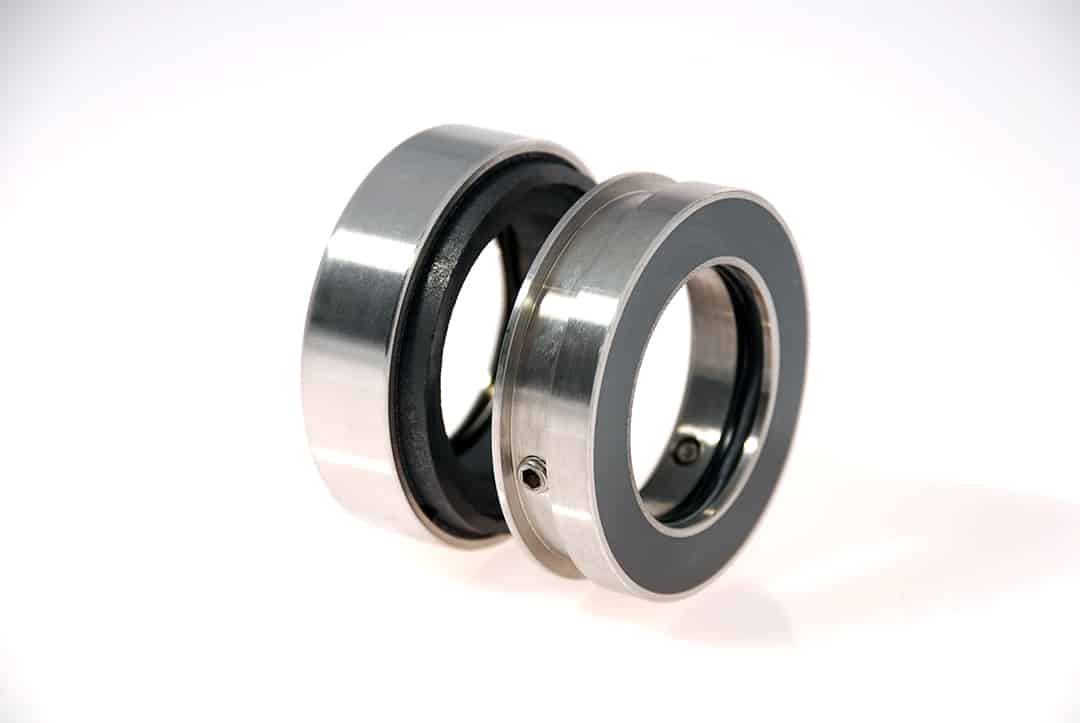
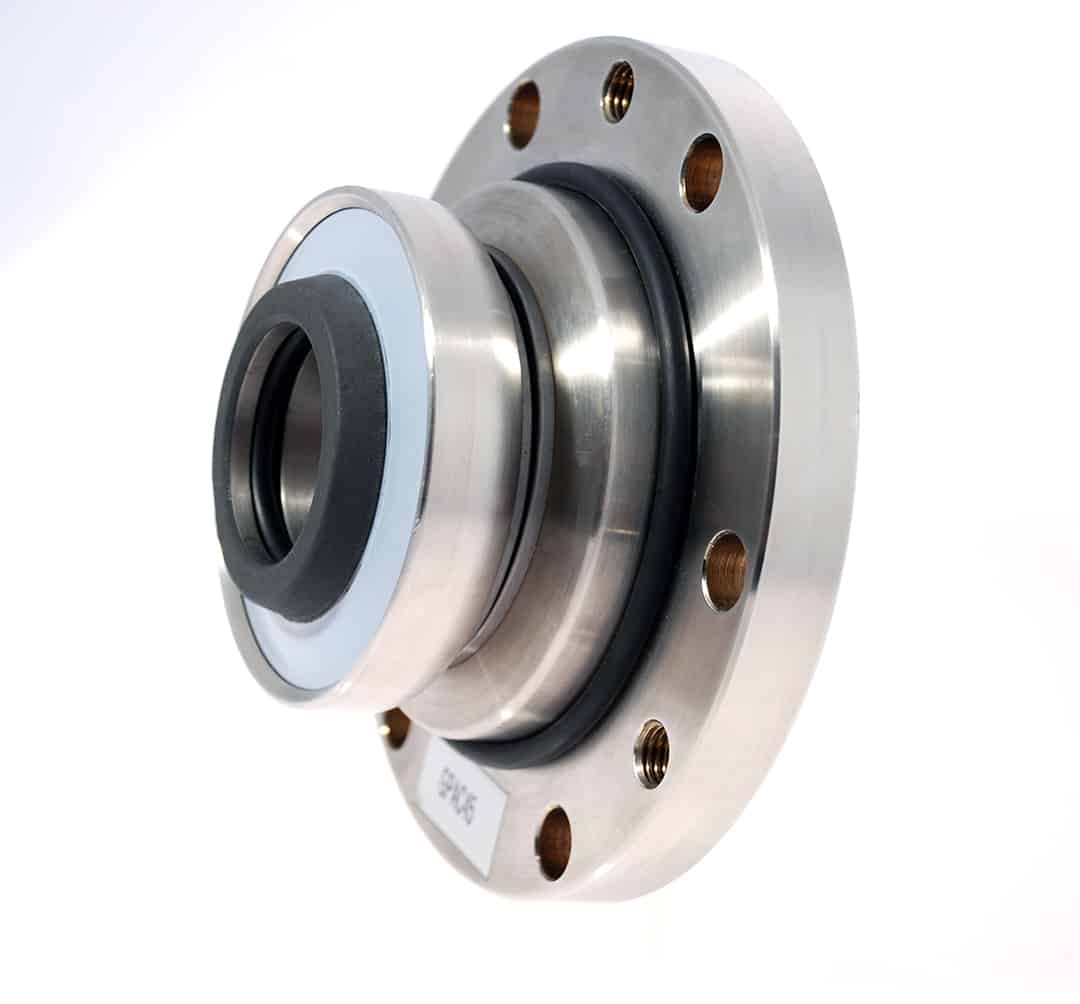
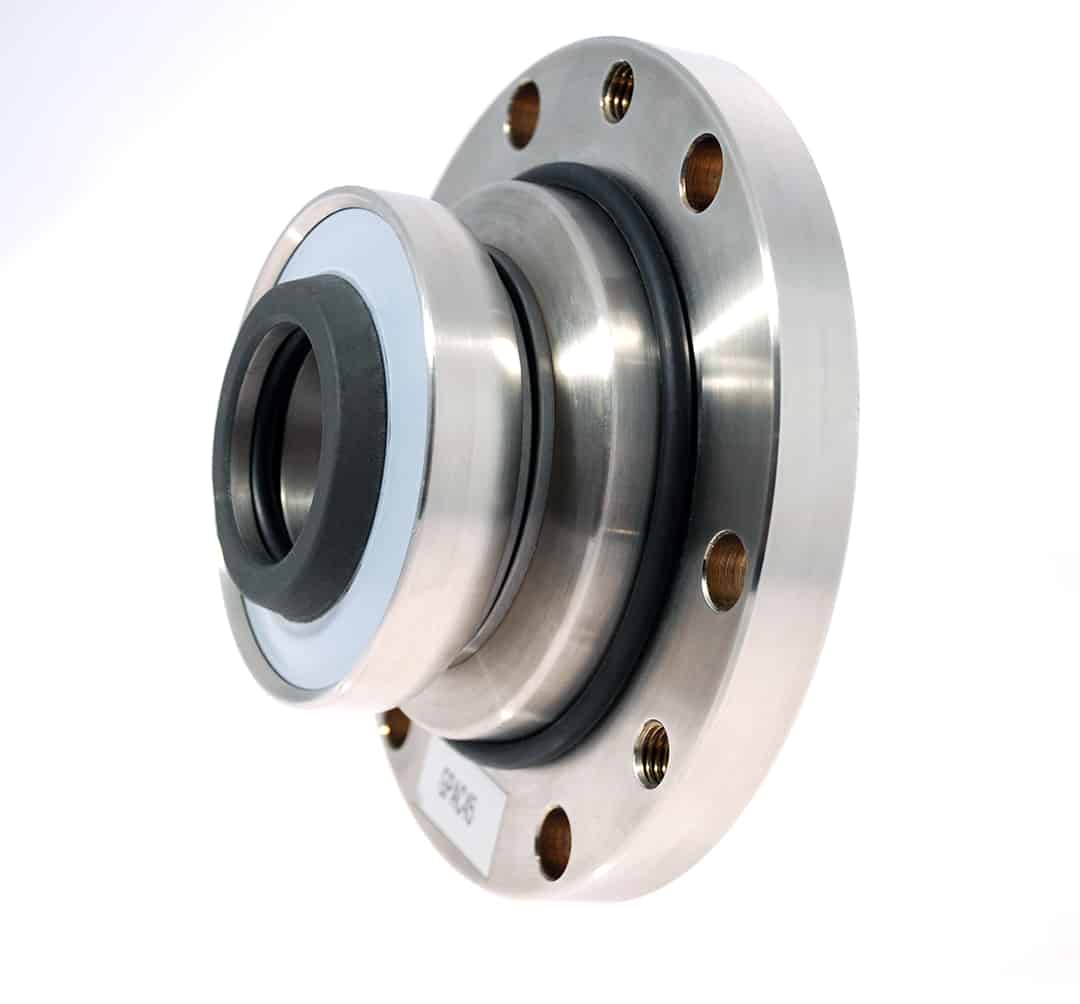
A mechanical seal is a critical component used to prevent fluid leakage in rotating equipment by creating a seal between a rotating shaft and a stationary housing. Its primary function is to isolate different fluids—such as air and process liquids—within pumps, compressors, and other rotating machinery. 

A typical mechanical seal assembly includes: 

  • A rotating element (often called the rotor or mating ring) 
  • A stationary element (commonly referred to as the stator)   

At Qualiseal®, our mechanical seals are engineered for applications that demand minimal leakage and extended operational life. 

What are Typical Applications for Mechanical Seals? 

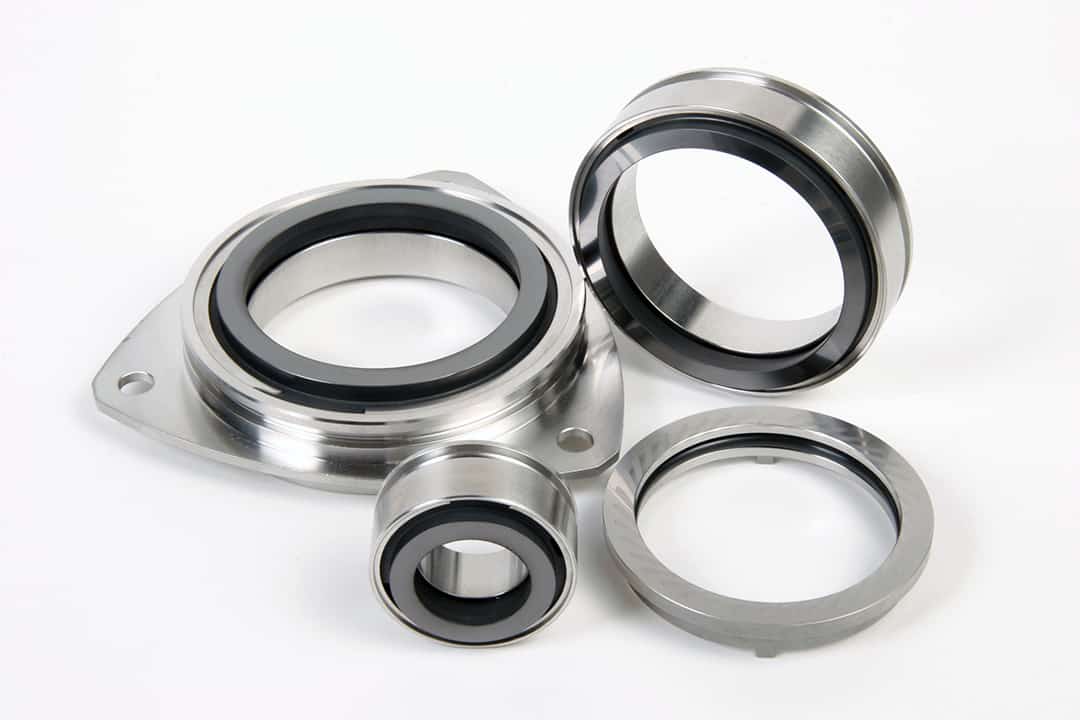
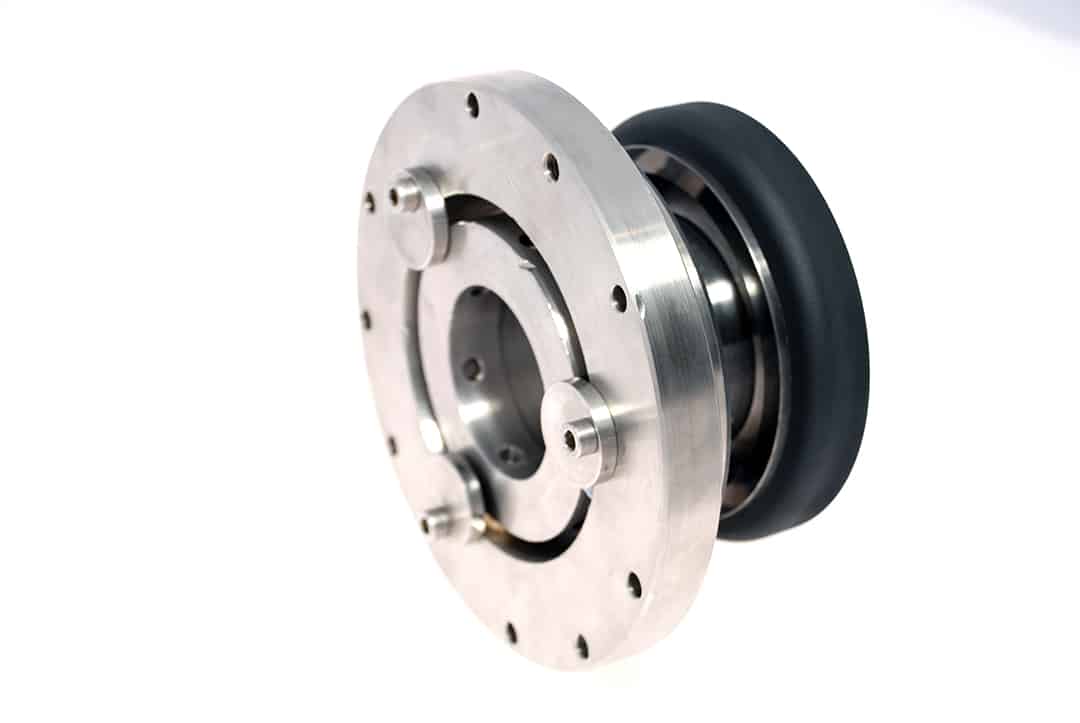
We typically deal with three types of mechanical seals in critical aerospace and industrial applications: contacting face seals, non-contacting face seals and bellows-energized contacting seals. Technetics Qualiseal® mechanical seals are custom engineered to meet the demanding requirements in these situations. 

Precision Sealing Solutions for Critical Aerospace and Industrial Applications 

At Technetics, we specialize in engineered mechanical sealing systems designed for critical aerospace and industrial environments. Our Qualiseal® product line includes a range of advanced sealing technologies tailored to meet specific performance, speed, and pressure requirements.  

We typically address three core sealing architectures: 

  • 接触面密封
    Spring-energized designs ideal for low-pressure, low-speed applications such as oil and scavenge pumps, fuel transfer systems, and gearboxes. These seals are also used in industrial mixers and other moderate-duty rotating equipment. 
  • 非接触面密封
    Designed for high-speed (maybe mention a speed? To check with Aaron), high-temperature environments where minimizing wear and thermal distortion is critical—commonly found in aerospace gearboxes, starters, and accessory drive systems. 
  • Bellows-Energized Contacting Seals
    Used in small engine main shaft, APU compressor, and turbopump applications where compact design, pressure stability, and thermal resilience are essential. 

In addition, we offer circumferential sealing solutions for main shaft applications in both aerospace and industrial compressors, where dynamic misalignment and thermal cycling require robust, flexible sealing performance. 

机械密封的类型

Technetics specializes in a wide range of mechanical seals, including both contacting and non-contacting face seals, each designed to meet specific performance requirements. 

Contacting vs. Non-Contacting Face Seals 

Both types function as sealing systems composed of a stationary component and a precisely matched rotating element. 

  • Contacting face seals are typically used in low-speed applications, where continuous contact between the seal faces ensures effective sealing. 
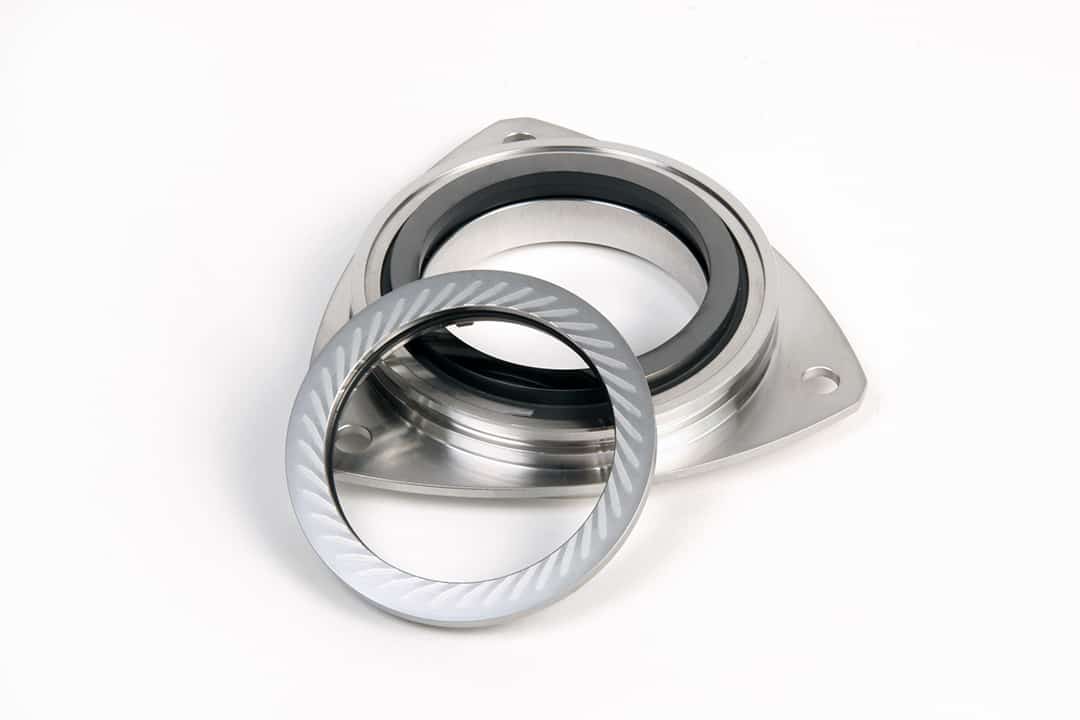
  • Non-contacting (hydrodynamic lift-off) seals feature specially engineered grooves in the rotating face. These grooves generate a hydrodynamic effect that lifts the seal faces apart during operation. This design significantly reduces friction and heat, resulting in minimal leakage and extended seal life. 

环形密封圈 

Unlike face seals, circumferential seals operate radially between the shaft and the seal. Technetics offers two main types: 

  • Controlled-gap seals: These allow for tight clearances and predictable leakage rates, as all surrounding components expand uniformly with temperature changes. 
  • Fractured-ring seals: Commonly used in space and turbo-pump applications, these seals incorporate fragmentedfractured carbon rings that expand and contract with the shaft. This ensures consistent radial sealing even under extreme thermal cycling. 

What’s the advantage of a Hydrodynamic Lift-off Face Seal? 

n mission-critical environments like 航空航天, where traditional mechanical seals are not viable, Technetics’ Qualiseal® non-contacting hydrodynamic lift-off face seals offer a superior alternative. Unlike other non-contacting seals that struggle with altitude fluctuations, our advanced designs maintain a stable, stiff air film across all operating conditions. 

This performance is made possible by precision-engineered grooves in the rotor, which generate a hydrodynamic pumping action that keeps the seal faces separated. The result is minimal friction, lower heat generation, and exceptional reliability—even in the most extreme environments. 

All Qualiseal® systems are designed, manufactured, and tested in-house, ensuring the highest standards of quality and performance. 


What are the typical benefits of a hydrodynamic lift-off design vs conventional mechanical seals? 

Non-Contacting Hydrodynamic Lift-Off Seal Benefits 

  • Minimal Wear for Extended Durability 
  • Efficient Heat Management with Low Operating Temperatures 
  • Enhanced Seal Longevity for Demanding Applications 

In critical use-cases, like aerospace, where a typical contacting seal is not an option, Technetics Qualiseal® non-contacting hydrodynamic lift-off face seals are a superior alternative. While other non-contacting seals fail due to the changes in altitude, Technetics’ Qualiseal® hydrodynamic lift-off seals maintain a consistently stiff air film throughout each operating condition. The unique geometric features designed into the rotor grooves create a pumping action to maintain separation from the seal. We manufacture and test each sealing system in-house. 

Technetics also offers a 包含边缘焊接的金属波纹管的机械密封 that provide superior stroke capabilities and precise spring rates. This design ensures that the force balance equation stays consistent as the seal ascends altitude and runs through various operating conditions. Technetics optimizes our mechanical seals’ engineering design and manufacturing for even the most critical customer applications. 

 

Proposed Combined version of “What’s the advantage of a Hydrodynamic Lift-off Face Seal?” and “What are the typical benefits of a hydrodynamic lift-off design vs conventional mechanical seals? » 

In use-cases, like aerospace, where a typical contacting seal is not an option, Technetics Qualiseal® non-contacting hydrodynamic lift-off face seals are a superior alternative. While other non-contacting seals fail due to the changes in altitude, Technetics’ Qualiseal® hydrodynamic lift-off seals maintain a consistently stiff air film throughout each operating condition. The unique geometric features designed into the rotor grooves create a pumping action to maintain separation from the seal.  


All Qualiseal® systems are designed, manufactured, and tested in-house, ensuring the highest standards of quality and performance. 

This performance is made possible by precision-engineered grooves in the rotor, which generate a hydrodynamic pumping action that keeps the seal faces separated. The result is minimal friction, lower heat generation, and exceptional reliability—even in the most extreme environments. 

Technetics also offers a 包含边缘焊接的金属波纹管的机械密封 that provide superior stroke capabilities and precise spring rates. This design ensures that the force balance equation stays consistent as the seal ascends altitude and runs through various operating conditions. Technetics optimizes our mechanical seals’ engineering design and manufacturing for even the most critical customer applications. 
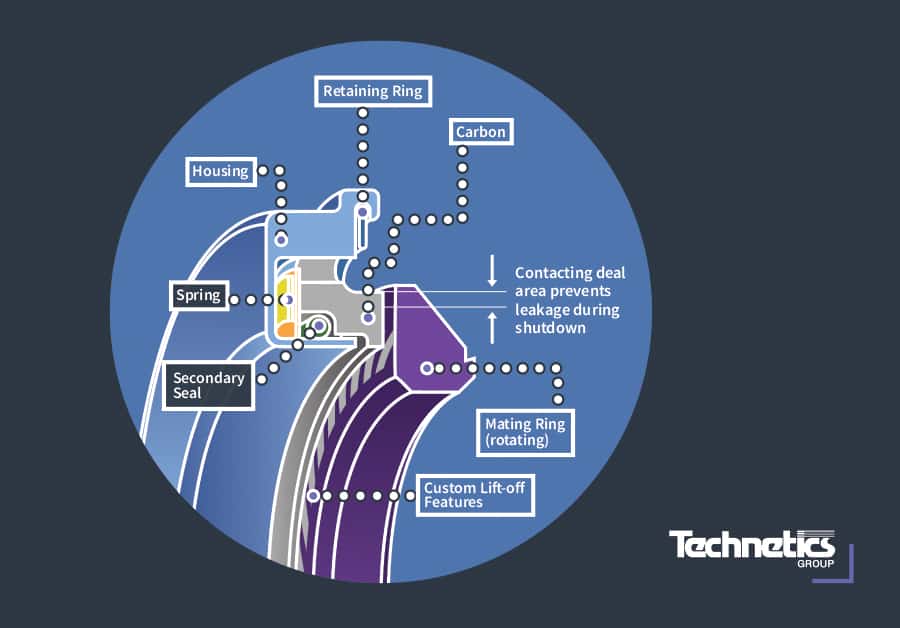
Non-Contacting-Lift-Off-Seal-cross-section

What’s the advantage of using Metal Bellows in Mechanical Seals? 

Engineered for Precision: Metal Bellows Mechanical Seals 

Technetics also offers mechanical seals integrating edge-welded metal bellows, which are enabling: 

  • Superior axial stroke capabilities 
  • Consistent spring rates 
  • Stable force balance across altitude and pressure variations 

This design ensures optimal performance in dynamic conditions, making it ideal for high-altitude and high-performance applications. Every seal is engineered with precision and optimized for durability, reliability, and application-specific performance. 

What are the temperature limitations of Mechanical Seal? 

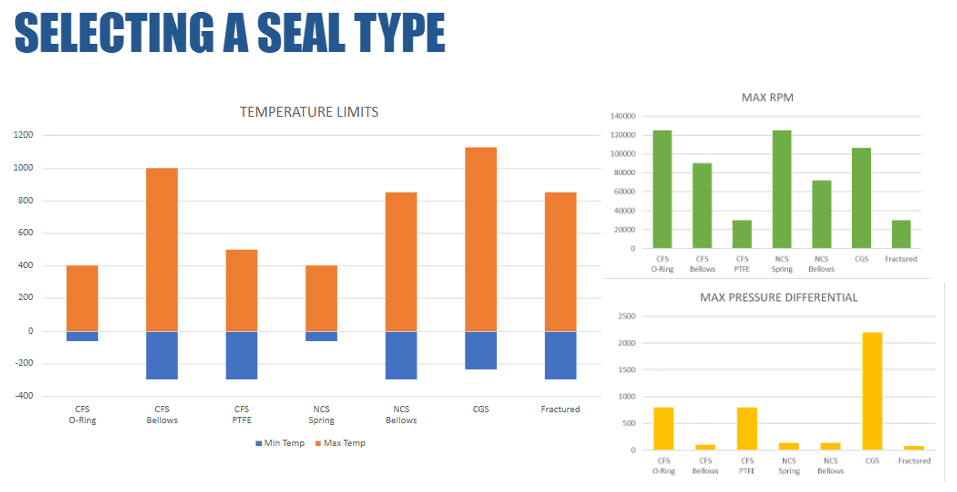
The material mechanical seals are made from dictates their temperature limits. Carbon is good up to 800 degrees Fahrenheit, while secondary seals and typical contact face seals are limited to 300-500 degrees Fahrenheit. 

Why is surface speed important? 

When evaluating mechanical seal applications, we’re interested in the surface speed, not just the rotating speed. Surface speed is a key input when determining the system’s pressure velocity (PV). We work with applications of up to one million PV. 

Technetics can customize the seal to accommodate shaft diameters from 3/8” to 10 inches. We also consider the space envelope (the amount of space available for the seal). 

什么 materials are used in 机械 密封圈, and how do they affect performance?

Seal materials determine temperature and pressure limits. For example: 

  • Carbon: Up to 800°F (426°C) 
  • Secondary seals and contact faces: Typically rated for 300–500°F (148°C-260°C) 
  • Custom materials: Selected based on media compatibility, pressure, and wear resistance 

什么  surface speed, and why does it matter?

Surface speed—not just rotational speed—is critical in calculating the Pressure-Velocity (PV) factor, a key metric in seal design. Technetics designs for applications up to 1,000,000 PV. 

What shaft sizes can Technetics seals accommodate?
We customize seals for shaft diameters ranging from 3/8 inch to 10 inches (1 cm to 25.4 cm), while also considering the space envelope available for installation. 

Do all 密封圈 leak?

Yes, all seals allow some leakage. The goal is to engineer the optimal solution to meet specific leakage requirements compatible with the application. 

  • Mechanical face seals: Allow minimal leakage 
  • Circumferential seals: May allow more, depending on the application 

如何 customizable are 技术学 密封圈?

Highly customizable. We select materials and configurations based on: 

  • Lubricity needs (e.g., carbon, ceramics for the friction faces) 
  • Pressure resistance (e.g., stainless steel, high-performance alloys for housing) 
  • Chemical compatibility (e.g., PTFE, high-performance elastomers for secondary seals) 

产品

资源